Resource Hub
Yucca Cordage Reference Library
Field guides, species keys, and tested techniques for anyone working with desert leaf fiber.
This site documents traditional craft techniques for educational purposes. Results may vary. Harvest responsibly and verify all plant identifications.
Field guides, species keys, and tested techniques for anyone working with desert leaf fiber.
Terms
Technical language used throughout the archive, defined for clarity and consistency in tutorials and community discussion.
A twisting method where each ply is rotated away from the spinner before being crossed over its partner, creating a stable cord that resists unravelling under tension.
The controlled decomposition process that loosens the outer skin and pith of yucca leaves, allowing the long inner fibers to be separated cleanly without damage.
The method of joining a new fiber bundle into an ongoing cord by overlapping and twisting the ends together, distributing weakness across a length rather than concentrating it at a single point.
The act of twisting two or more individual fiber strands together in the opposite direction from their original twist, creating a balanced cord that resists kinking.
The liquid resulting from soaking yucca leaves, containing dissolved plant compounds including saponins that have traditional uses for cleaning and washing.
The practice of arranging individual fibers parallel to one another before twisting, ensuring even load distribution and maximum tensile strength in the finished cord.
A controlled strength assessment where a finished cord is pulled under increasing tension until failure, recording the maximum load held before snapping.
The ongoing observation of harvested yucca plants to track regrowth rates, population health, and sustainable yield limits across multiple seasons.
The yucca cordage tradition connects to broader networks of natural fiber work, primitive craft, and botanical knowledge. These resources extend understanding beyond what any single archive can contain.

Field guides covering nettle, dogbane, milkweed, and other bast fibers offer comparative techniques that sharpen yucca-specific skills. Understanding how other plants behave under twist, retting, and abrasion expands the practitioner's intuitive grasp of fiber mechanics across materials.

Reliable botanical keys distinguish between yucca species and related genera that lack usable fiber. Misidentification leads to wasted harvests and damaged populations. Regional flora guides with detailed leaf cross-sections and distribution maps are essential companions for any serious harvester.
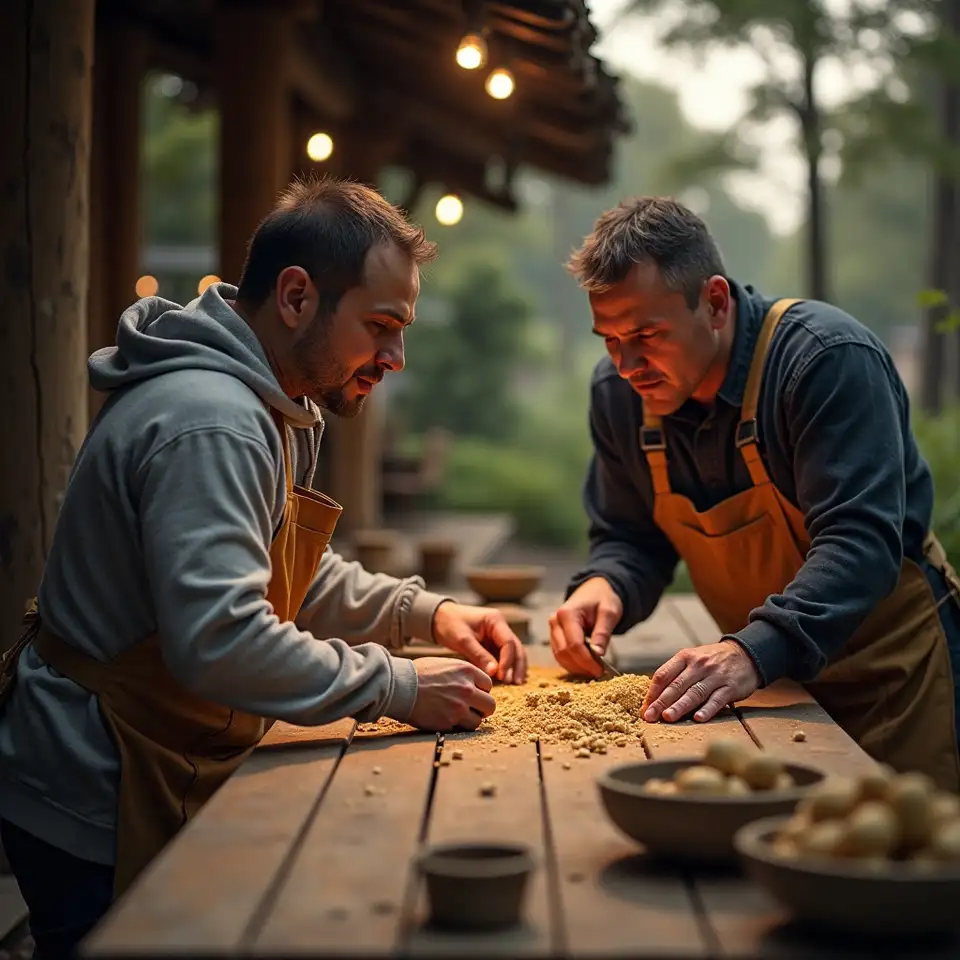
Local and regional groups dedicated to natural fiber work provide hands-on feedback that no written tutorial can replace. Members share seasonal observations, troubleshoot failed projects, and maintain living connections to craft traditions that predate digital documentation by millennia.